
Do You Really Need an Electrical Diagnostic? Here’s the Truth for Hamilton Drivers
Let’s be real for a second: seeing a new warning light pop up on your dashboard is never the highlight of your day. Whether you’re commuting through Hamilton or heading out for a weekend in Dundas, that little glowing icon: or a sudden glitch like a window that won’t roll up: feels like an uninvited guest.
The immediate thought for most of us is usually, “Can I just ignore this for a week?” followed quickly by, “Is a mechanic just going to charge me to plug in a computer?”
If you’ve ever felt skeptical about paying for an electrical diagnostic, you aren’t alone. In the old days, cars were mostly mechanical. If something broke, you could usually see it, smell it, or hear it. But today? Your vehicle is essentially a high-performance supercomputer on wheels. At Arrow Automotive Repairs, we believe in total transparency. So, let’s peel back the curtain and talk about the truth behind electrical diagnostics and why they are the secret to keeping your car: and your wallet: in good health.
Your Car’s Nervous System: Why It’s So Complex
Think of your car’s electrical system as its nervous system. It connects everything. From the engine control module (ECM) that tells your fuel injectors when to fire, to the tiny sensors that monitor your tire pressure, everything relies on a steady flow of electricity and data.
When something goes wrong, it’s rarely as simple as a “broken part.” It could be a frayed wire, a corroded ground connection (very common with our Hamilton road salt!), or a software glitch. An electrical diagnostic is like a medical X-ray for your car. It allows us to see “inside” the systems without tearing the whole vehicle apart first.
The “Free Scan” Myth vs. A Professional Diagnostic
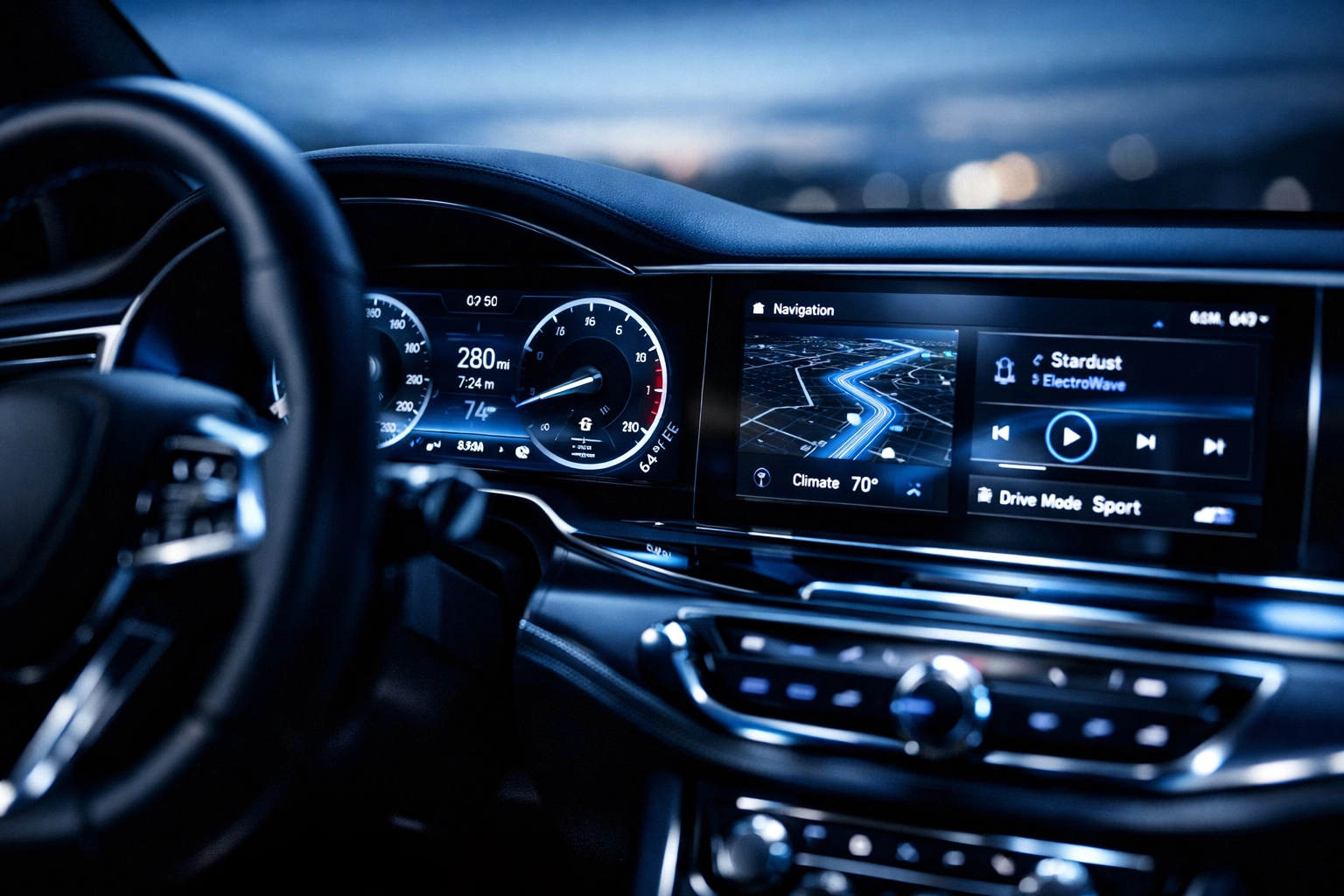
We see it all the time: a driver goes to a big-box parts store because their check engine light is on. The store plugs in a basic code reader for free and says, “It’s a P0420 code; you need a new oxygen sensor.”
The driver buys the sensor, installs it, and… the light stays on. Why? Because the code didn’t mean the sensor was broken; it meant the sensor was reading something wrong. The actual problem might have been a vacuum leak or a burnt wire miles away from the sensor itself.
This is the “Truth” we want Hamilton drivers to know: A code is a symptom, not a diagnosis.
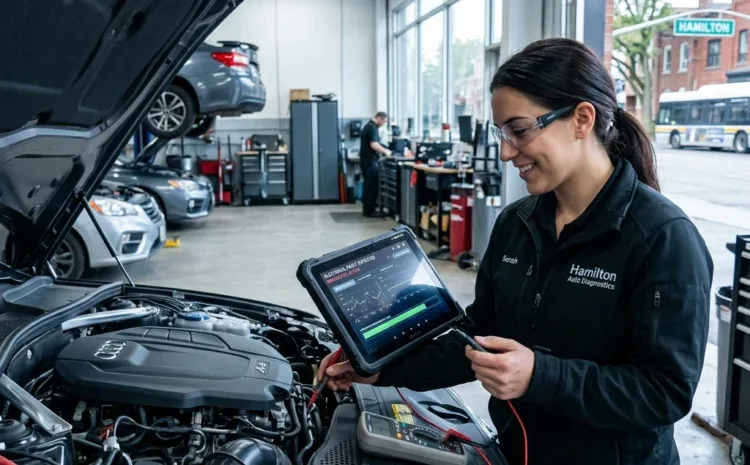
When you come to us for a check engine light diagnosis in Hamilton, we aren’t just reading codes. We are using professional-grade oscilloscopes and multi-meters to test the actual integrity of the circuits. We find the “why” so you don’t spend money on parts you don’t actually need. For more on this, check out our guide on auto diagnostics and essential vehicle health checks.
Signs Your Hamilton Commute is About to Get “Shocking”
Sometimes the signs of electrical failure are subtle. You might think your car is just “getting old,” but these are actually the “quiet cries for help” from your electrical system:
- The Lazy Crank: Your car takes an extra second or two to start in the morning. This is often the battery, alternator, or starter giving you a final warning.
- The Ghost in the Machine: Your radio resets for no reason, your interior lights flicker, or your dashboard needles dance around.
- The Stinky Situation: If you smell burning plastic or “ozone” (that metallic, electric smell), pull over. That’s a wire overheating, and it’s a major fire risk.
- The Performance Hiccup: Believe it or not, many “engine” problems are actually electrical. If your car stutters during acceleration, it could be a failing ignition coil or a faulty sensor.
If you’re noticing these, it’s time to look into car electrical repair in Hamilton before you’re left stranded on the side of the 403.
How Hamilton Weather Attacks Your Electronics
Living in the Golden Horseshoe comes with a specific set of challenges for your car. We deal with high humidity in the summer and a literal salt bath in the winter.
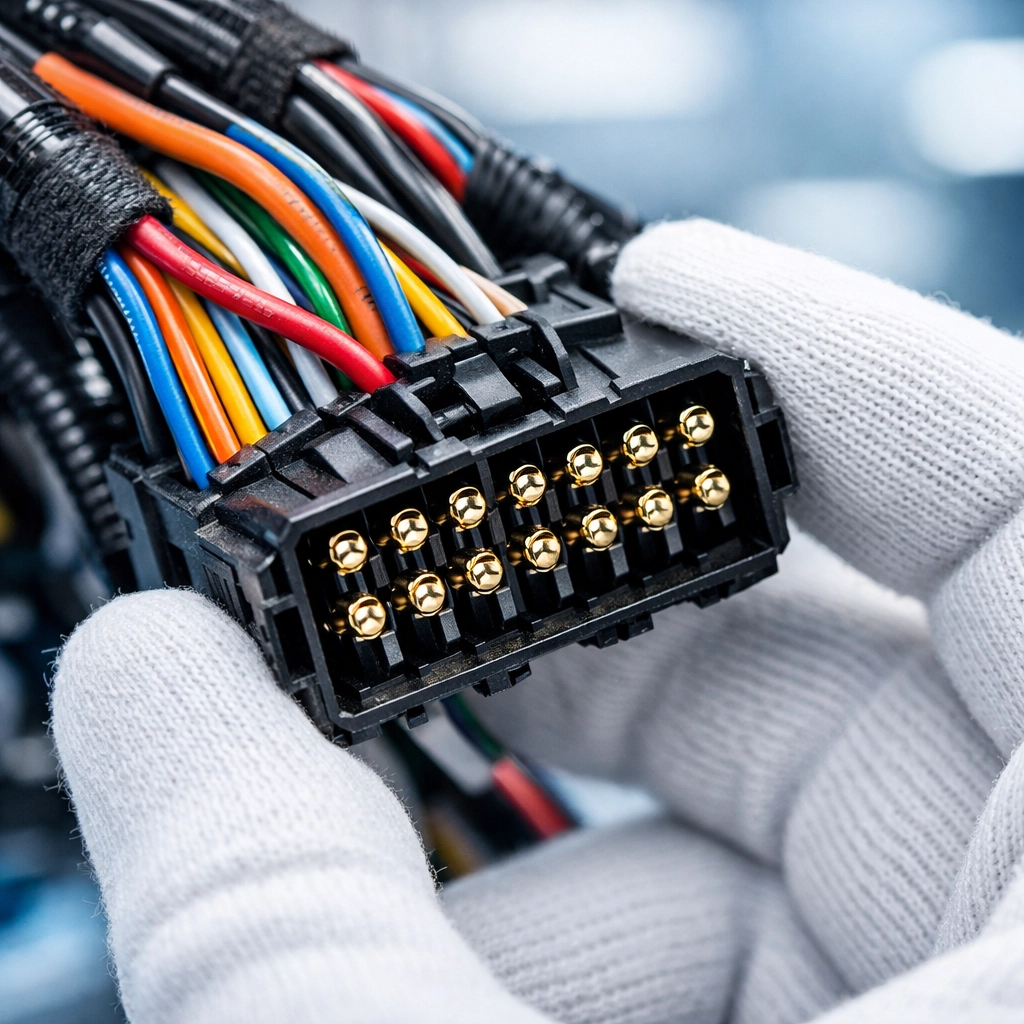
Corrosion is the #1 enemy of electrical systems. Saltwater from our winter roads loves to creep into wire harnesses and connectors. Once it gets in there, it starts green crusty corrosion that eats away at the copper. This creates “high resistance,” which can cause components to fail or behave erratically.
A proactive diagnostic can often catch this corrosion early. We can clean the contacts and apply protective grease before the wire snaps entirely, saving you from a much more expensive engine repair or harness replacement down the road.
Transparency You Can See: The Arrow Difference
One of the reasons people hate “diagnostics” is the feeling that they are paying for “magic.” You hand over your keys, the mechanic goes into a dark room, and then tells you it’s going to cost $500.
At Arrow Automotive Repairs, we’ve changed the game. We use digital imaging and transparent reporting for every diagnostic.
When we find a corroded wire or a failed sensor, we don’t just tell you about it: we take a high-resolution photo of it and send it directly to your phone. We want you to see what we see. It’s about building trust. We serve the Dundas and Hamilton communities with the philosophy that an educated customer is a happy customer. You can learn more about our commitment to quality on our about us page.
Is it Really Worth the Money? (Proactive vs. Reactive)
Let’s talk numbers. A professional electrical diagnostic might cost a bit upfront, but let’s look at the alternative.
If a failing alternator isn’t caught, it can eventually “fry” your battery and potentially damage your Engine Control Module. Now, instead of a simple repair, you’re looking at a bill that’s four or five times higher.
Think of a diagnostic as a “routine checkup” for your car’s brain. It ensures that the lifeblood (electricity) is flowing correctly to all the vital organs. By being proactive, you avoid the headache of a dead car in a grocery store parking lot and the extra cost of a tow truck.

The “Quiet Heroes”: Sensors and Modules
Modern cars have dozens of “hidden” computers. Your ABS (Anti-lock Braking System) has its own module. Your transmission has one. Even your doors have them.
When these “quiet heroes” start to fail, the symptoms can be strange. Your car might shift roughly, making you think you need a whole new transmission. In reality, it might just be a $100 sensor that’s sending bad data to the computer. Without a proper diagnostic, you might end up paying for a transmission rebuild you didn’t need.
We specialize in European auto repair, where electrical systems are notoriously complex. Whether you drive a domestic truck or a high-end German sedan, the logic is the same: find the root cause, fix it once, and fix it right.
What to Expect During Your Visit
When you bring your vehicle to Arrow Automotive Repairs for an electrical issue, here is how we handle it:
- The Interview: We ask you exactly what happened. When did the light come on? Was it raining? Did the car make a sound?
- The Preliminary Scan: We pull the health data from your car’s computer.
- The Deep Dive: Our technicians use specialized tools to test circuits, check grounds, and verify component health.
- The Digital Report: You receive a text or email with our findings, including photos and a clear explanation: no confusing jargon allowed.
- The Solution: We provide a transparent estimate and wait for your go-ahead before any wrenches start turning.
Final Truth: You’re in Control
At the end of the day, an electrical diagnostic is about empowerment. It’s about knowing exactly what is going on with your second-largest investment. It removes the “guessing game” and gives you the confidence to drive your family around Hamilton and Dundas safely.
If your car is acting “weird,” or that check engine light is staring you down, don’t wait for a total breakdown. Let’s get to the bottom of it together.
Ready to clear those dashboard lights? Contact us today to schedule your professional diagnostic. We’ll keep you in the loop every step of the way, ensuring your car stays reliable for years to come.