
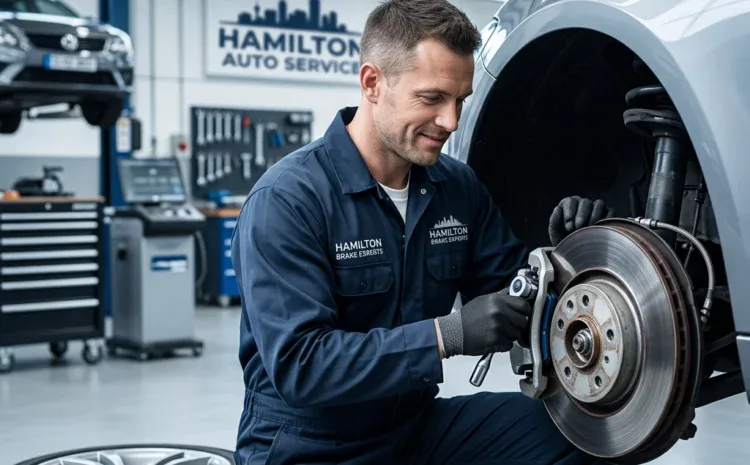
10 Reasons Your Brakes Are Grinding and How to Fix Them: Expert Brake Repair in Hamilton
We’ve all been there. You’re driving down Main Street in Hamilton, the sun is shining, and you’re heading home after a long day. You approach a red light, ease your foot onto the brake pedal, and then you hear it, a gut-wrenching, metal-on-metal grinding sound. Your heart sinks. It’s not just a noise; you can feel it vibrating through the soles of your shoes.
Let’s be real: no one loves car maintenance. It’s often seen as an interruption to our busy lives or an unexpected dent in the checkbook. But your vehicle is one of the most significant investments you’ll ever make. More importantly, it’s the vessel that keeps you and your family safe on the roads of Hamilton and Dundas.
When your brakes start grinding, your car is essentially tapping you on the shoulder and saying, “Hey, we have a problem.” Ignoring that tap can turn a simple fix into a massive headache. As your local mechanic in Hamilton, we believe in transparency. We want you to understand exactly what’s happening under your wheel wells so you can make informed decisions.
Here are the 10 most common reasons your brakes are grinding and exactly how we fix them at Arrow Automotive Repairs.
1. Worn-Out Brake Pads (The “Metal-on-Metal” Classic)
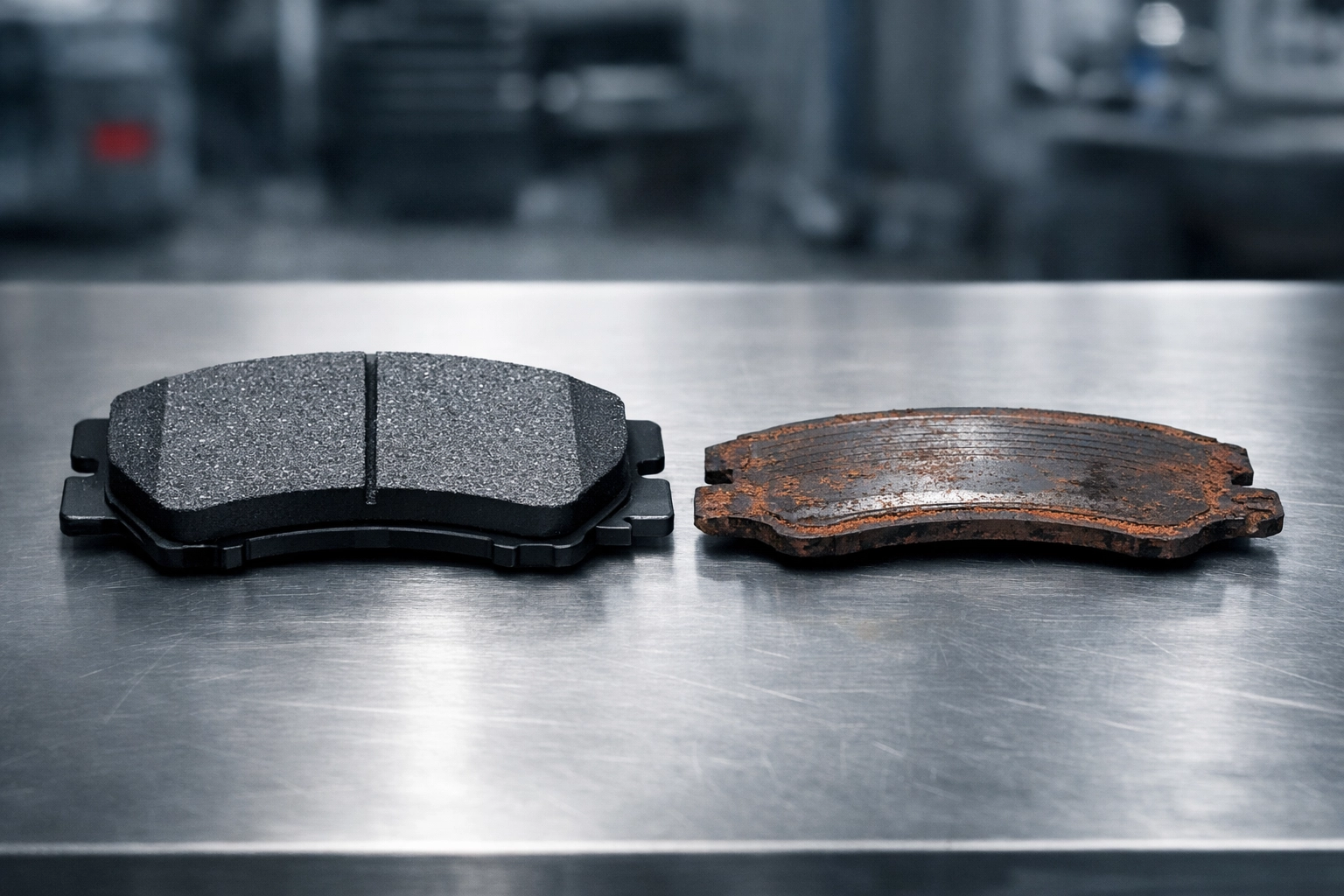
This is the most common culprit we see. Think of your brake pads like the soles of your favorite walking shoes. Over time, that friction material wears down. Most pads come equipped with a small metal tab called a wear indicator. When the pad gets too thin, this tab scrapes against the rotor to give you a high-pitched warning.
If you ignore that squeal, the friction material disappears entirely. Now, you have the metal backing plate of the pad pressing directly against the metal brake rotor. This is the definition of “metal-on-metal.”
The Fix: We replace the brake pads. If caught early, your rotors might still be saved. If not, they’ll need attention too.
2. Damaged or Warped Rotors
If you’ve been driving with worn pads for a while, or if you tend to “ride the brakes” down long hills in the Dundas Peak area, your rotors can become damaged or warped from excessive heat. A warped rotor doesn’t have a flat surface, which causes the pads to bounce and grind as they try to grab hold.
The Fix: Depending on the thickness left, we can sometimes “resurface” or turn the rotors to make them flat again. However, in most modern vehicles, replacing them with high-quality new units is the safest and most cost-effective long-term solution. You can learn more about common brake problems and how to fix them on our dedicated guide.
3. Debris Caught Between the Rotor and Pad
Hamilton roads see it all, gravel, road salt, and bits of debris. Sometimes, a tiny stone or a piece of road “junk” gets lodged in the small gap between your brake pad and the rotor. This creates a consistent, terrifying screech or grind even when you aren’t applying the brakes.
The Fix: This is often a quick “surgical” fix. We remove the wheel, inspect the assembly, and clear out the debris. It’s a great example of why a professional brake repair in Hamilton is essential, it might be a simple fix, but you need an expert to confirm it.
4. Faulty Wheel Bearings
Wait, isn’t this a blog about brakes? Yes, but here’s the trick: a failing wheel bearing often sounds exactly like a brake grind. The difference is usually in the “when.” If the grinding noise changes in pitch when you turn the steering wheel, it’s likely the bearing, not the brakes.
The Fix: We replace the wheel bearing assembly. Think of the bearing as the “joint” that allows your wheel to spin freely. If it’s “arthritic” and grinding, the whole vehicle’s safety is at risk.
5. Lack of Lubrication on Brake Components
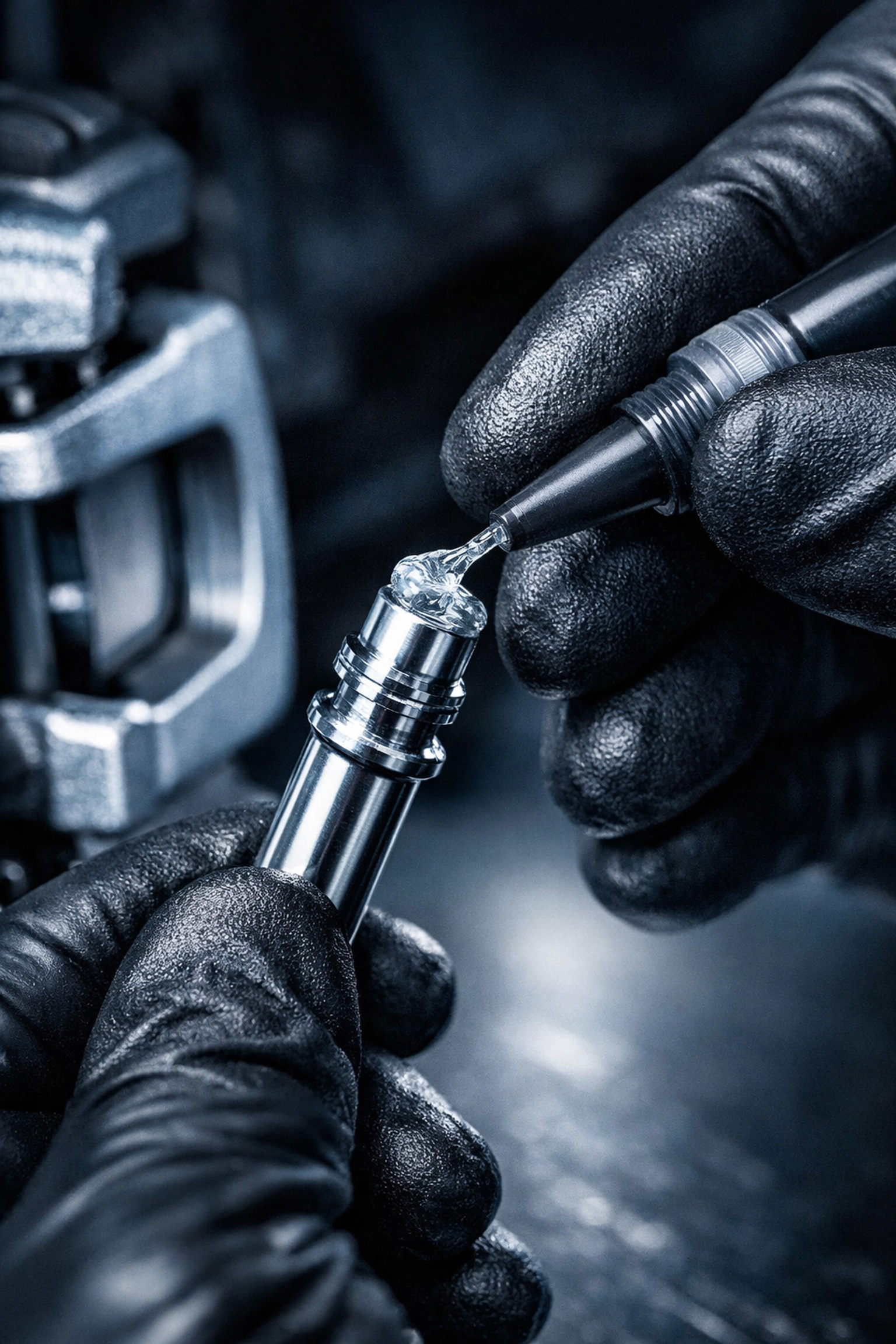
Your braking system is a complex mechanical dance. There are slides, pins, and pistons that need to move smoothly every time you hit the pedal. If these parts get dry and rusty, the caliper can’t retract properly, causing the pad to stay in contact with the rotor.
The Fix: We perform a comprehensive brake service where we clean all components and apply high-temperature grease to the moving parts. This is a key part of preventative maintenance.
6. Rust and Corrosion (The Ontario Special)
Let’s talk about our climate. The salt used on Hamilton roads during winter is incredibly hard on metal. If your car sits for a few days, a thin layer of rust can form on the rotors. The first few times you brake, you’ll hear a “scrubbing” or grinding sound as the pads wipe that rust away.
The Fix: Usually, just driving and braking normally will clear surface rust. However, if the rust has “pitted” the metal (created deep holes), the rotors will need to be replaced to ensure a safe stop.
7. Low-Quality Brake Pads
In the world of auto repair, you often get what you pay for. Some budget brake pads have a high metal content or inconsistent friction material. These can be noisy from day one.
The Fix: We always recommend and install premium-grade pads. They are the “quiet heroes” of your car: designed to offer superior stopping power without the annoying soundtrack.
8. Brake Caliper Issues
The caliper is the clamp that squeezes the pads against the rotor. If a caliper “seizes” or gets stuck, it can apply constant pressure on one side. This leads to rapid wear and a constant grinding sound.
The Fix: We inspect the caliper pistons and seals. If they are compromised, we replace the caliper to ensure your braking force is distributed evenly across all four wheels.
9. Infrequent Vehicle Use
If you have a “Garage Queen” that only comes out once a month, your brakes might actually suffer more than a daily driver. When a car sits, moisture builds up in the brake system, and the pads can even “bond” to the rotors.
The Fix: Regular use is the best medicine. Even a 15-minute drive once a week helps keep the “lifeblood” of your car moving. If the damage is already done, a full brake repair might be necessary to restore safety.
10. Improper Brake Pad Bedding
When new pads and rotors are installed, they need to be “broken in” or bedded. This involves a specific sequence of stops that transfers a thin layer of pad material onto the rotor. If this isn’t done correctly, you might experience uneven wear and grinding.
The Fix: Our technicians perform a test drive and proper bedding procedure for every brake job we do, ensuring your car is ready for the road the moment you pick it up.
Proactive vs. Reactive: Why It Matters
Think of your car’s brakes like your own health. A grinding sound is like a persistent cough: you could ignore it and hope it goes away, or you could see a specialist before it turns into something much worse.
Being proactive with your brake maintenance is an empowering way to save money. If you come in when you first hear a squeak, we might only need to replace the pads. If you wait until the grinding starts, you’re likely looking at pads, rotors, and potentially calipers. The “reactive” approach is always more expensive and significantly more dangerous.
At Arrow Automotive Repairs, we want to keep you in the loop. We don’t use confusing jargon to hide the truth. We’ll show you exactly what’s wearing out and why it needs attention. Our goal is to provide trustworthy service that gives you peace of mind every time you approach a stop sign in Dundas or a red light in Hamilton.
Experience the Arrow Difference
If your brakes are making noises that make you cringe, don’t wait. A grinding sound is more than just an annoyance; it’s a sign that your vehicle’s most important safety system is struggling.
As your dedicated mechanic in Hamilton, we pride ourselves on quality craftsmanship and transparent communication. Whether it’s a simple cleaning or a full system overhaul, we treat every car as if it were our own.
Ready for a quieter, safer ride? Contact Arrow Automotive Repairs today to schedule your brake inspection. Let’s get you back on the road with the confidence you deserve!