
The Escarpment Commute Is Brutal on Brakes: Why Hamilton Drivers Burn Through Pads Faster
If your daily drive takes you up and down Hamilton’s mountain, your brakes may be working harder than those on a similar vehicle driven mostly on flat roads.
Routes such as the Claremont Access, the Jolley Cut, and the 403 approaches can turn a short commute into repeated downhill braking. Every time your vehicle slows on a descent, your brake pads and rotors convert the car’s motion: and the force of gravity: into heat. Done day after day, that extra heat and friction can lead to faster wear.
That does not mean every Hamilton driver needs brake replacement more often. Good downhill driving habits make a significant difference. However, if you commute over the Niagara Escarpment regularly, it is worth understanding what your brakes are dealing with and how to recognize wear before it becomes a safety concern.
Why mountain driving wears brakes faster
Your braking system is designed to handle regular stops, including firm braking from higher speeds. The challenge with downhill driving is not one single stop. It is continuous or repeated braking while gravity is constantly pulling the vehicle downhill.
Many drivers respond by resting light pressure on the brake pedal for the entire descent. This is commonly called riding the brakes. Although the vehicle may feel controlled, the pads remain in contact with the rotors for a prolonged period. That creates heat without giving the brake components much opportunity to cool.
Over time, repeated heat can contribute to:
- Faster brake pad wear
- Glazed pads that provide less consistent friction
- Overheated or unevenly worn rotors
- Brake vibration or pedal pulsation
- Brake fade during demanding descents
- Premature wear on calipers and related hardware
Hamilton’s escarpment routes are not long mountain passes, and a healthy brake system should handle them safely. Still, a vehicle driven downhill every workday experiences a different pattern from one used primarily on flat city streets. Existing wear, heavy traffic, winter corrosion, vehicle load, and driving style all affect how quickly brake components reach their service limits.
The difference between pads and rotors
Brake pads are the friction components that press against the rotor when you apply the brake pedal. They are designed to wear gradually and protect the more expensive parts of the system.
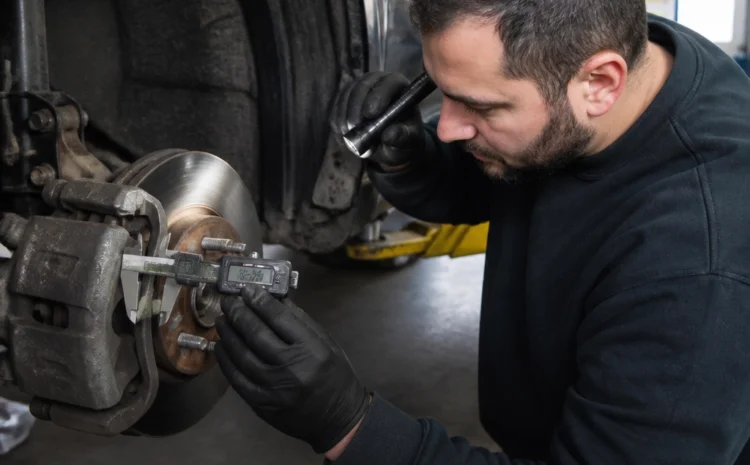
Rotors are the discs that rotate with the wheels. They must remain within the manufacturer’s minimum thickness specification and have a suitable surface for the pads to grip. Heat, corrosion, scoring, and uneven wear can affect rotor performance.
When pads become thin, the system may produce a squealing sound or activate a built-in wear indicator. If the friction material is completely worn away, the backing plate can contact the rotor and cause grinding. At that point, continuing to drive can damage the rotor and reduce braking performance.
Rotors do not automatically need replacement every time pads are changed. A proper inspection should consider their thickness, surface condition, corrosion, heat damage, and whether they meet safe operating specifications. Depending on their condition, rotors may be suitable for resurfacing or may need replacement.
That is why a trustworthy brake repair Hamilton appointment should involve more than simply looking through the wheel or recommending parts by mileage alone.
How to drive downhill without riding the brakes
The safest approach is to control your speed before the descent and use the vehicle’s gearing to reduce the work required from the brake pedal.
Use engine braking
Select a lower gear before starting down a steep section. In a manual vehicle, that means choosing an appropriate lower gear before the descent. In an automatic vehicle, you may be able to use a lower range such as L, 2, or 1, or use the manual gear-selection mode if your vehicle has one.
The correct setting depends on the vehicle, transmission, road conditions, and grade. Consult your owner’s manual if you are unsure.
A lower gear allows the engine to help control the vehicle’s speed. This does not eliminate the need for brakes, especially in traffic, but it reduces the amount of continuous braking required. The Official MTO Driver’s Handbook recommends shifting to a lower gear before travelling down a long, steep hill.
Apply the brakes firmly and briefly when needed
Avoid maintaining constant, light pressure on the pedal from the top of the hill to the bottom. Instead, allow engine braking to help manage your speed, then apply the brakes smoothly and firmly when you need to slow further. Release the pedal once you have reduced speed enough.
In traffic, always use the brake pedal appropriately so your brake lights communicate your intentions to drivers behind you. Engine braking is a useful tool, but it is not a substitute for safe signalling or controlled braking.
Leave more following distance
Extra space gives you more time to respond to slowing traffic without making repeated hard stops. This matters on busy sections near the Claremont Access, the Jolley Cut, and the 403, where traffic speed can change quickly.
A slower, smoother descent is easier on your brake system and gives you more control around curves, congestion, rain, snow, and ice.
Be mindful of weight
Passengers, cargo, roof equipment, and towing all increase the amount of energy your brakes must manage. If your vehicle is heavily loaded, lower your speed before the descent and leave more room to stop.
Signs your brakes need an inspection
A downhill commute can reveal brake problems that might not be obvious during short, flat-road trips. Book an inspection if you notice:
- Squealing, scraping, or grinding sounds
- A soft, spongy, or sinking brake pedal
- Vibration through the steering wheel or pedal
- The vehicle pulling to one side while braking
- Longer stopping distances
- A brake, ABS, or warning light on the dashboard
- A burning smell after a descent
- One wheel that feels unusually hot compared with the others
A burning smell or sudden change in braking performance deserves immediate attention. If the brakes feel weak, do not continue driving normally and hope the problem disappears. Stop in a safe location and arrange professional help.
Brake concerns can also be connected to sticking calipers, restricted brake lines, old brake fluid, or uneven pad contact: not just worn pads. A complete inspection helps identify the actual cause.
What happens during a transparent brake inspection?
At Arrow Automotive Repairs, our technicians inspect the brake system and explain what they find before recommending work. That can include checking pad thickness, rotor condition, caliper operation, brake hardware, fluid condition, and ABS-related faults when warning lights or diagnostic symptoms are present.

The goal is not to replace parts automatically. If your pads still have useful life and the rotors remain within safe specifications, you should receive clear guidance about monitoring them and planning future service. If replacement is required, you should understand why.
Arrow Automotive Repairs also provides digital images of service and repair items directly to customers. Seeing the condition of a worn pad, scored rotor, or damaged component makes the recommendation easier to understand. You can make an informed decision before approving brake work instead of relying on a vague “you need brakes” explanation.
Our brake system repair and service page outlines services including brake inspections, pad and rotor replacement, brake fluid flushes, ABS diagnostics, caliper service, and emergency brake repairs.
How often should Hamilton mountain commuters check their brakes?
There is no single mileage interval that fits every driver. Brake life depends on vehicle weight, brake design, traffic, driving habits, road conditions, and how frequently you travel steep grades.
As a general precaution, have your brakes inspected at least once a year or during regular maintenance. You may want to check them sooner if you drive the escarpment every day, frequently carry heavy loads, or are unsure when the brake components were last serviced.
Regular inspections can also identify problems before they become expensive. A sticking caliper, for example, can create uneven wear and excess heat. Finding it early may prevent damage to additional components.
If your vehicle also needs routine maintenance, Arrow’s automotive repair services in Dundas cover a range of needs for European, Domestic, and Asian vehicles.
Trust your brakes on every Hamilton commute
The escarpment is part of everyday driving for many Hamilton and Dundas residents, but repeated downhill braking should not be ignored. Use a lower gear before steep descents, avoid riding the brakes, maintain a safe following distance, and pay attention to changes in braking feel or noise.
When you need a mechanic Hamilton drivers can rely on for clear advice, Arrow Automotive Repairs is located at 200 King Street West in Dundas. We will inspect your vehicle carefully, explain what needs attention, and keep you in the loop with digital photos before you approve any brake repair or other car repair Hamilton service.
Book an appointment or call Arrow Automotive Repairs at 905-627-3716 for a brake inspection and straightforward guidance.